

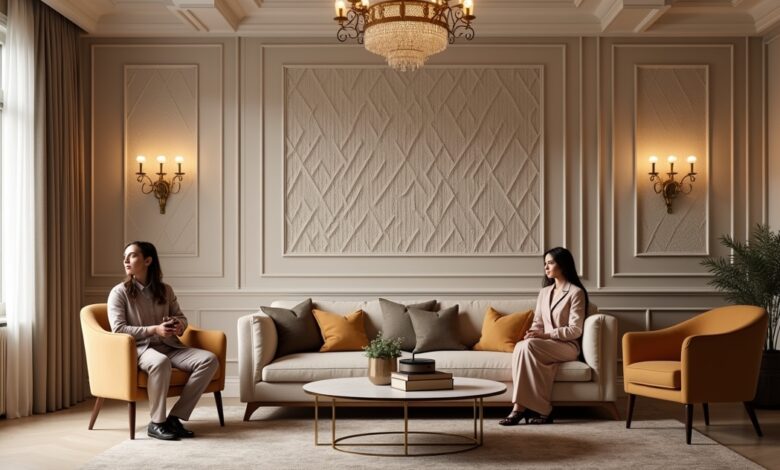
Wall moulding adds depth, character, and structure to a room. It works by breaking up flat surfaces with raised or recessed detailing, drawing the eye and giving walls a finished look. In Thai homes, where clean lines and open layouts are common, this simple addition brings warmth and definition to spaces that might otherwise feel plain.
The appeal of wall moulding (known as บัวผนังภายใน in Thai) lies in its versatility. You can use it in modern condos in Bangkok or traditional teak houses in the north. It suits both minimalist interiors and more decorative styles. A thin border along the ceiling softens the transition between wall and roof, while panel moulding across a living room wall creates a sense of grandeur without heavy renovation.
Thai interiors often balance natural materials with cool, airy design. Wall mouldings complement this beautifully. Wood-based profiles match well with rattan furniture, woven textiles, and indoor plants, which are staples in many Thai living rooms. Paint the moulding in soft neutrals to keep the space light, or choose deeper tones to add contrast against white walls.
Types of Wall Moulding
Several styles work well in Thai homes:
- Crown moulding sits where the wall meets the ceiling. It gives rooms a polished, elegant feel and helps hide small imperfections in older buildings.
- Chair rail moulding runs horizontally at mid-height. It protects walls from furniture scuffs and divides colours or textures neatly.
- Panel moulding forms rectangular frames on the wall. This creates a classic, structured look popular in dining rooms and hallways.
- Baseboard moulding covers the join between wall and floor. It gives a clean edge and shields the base of the wall from daily wear.
Choosing the Right Material
Thailand’s climate matters when picking materials. High humidity can affect certain products, so durability is important. Solid wood offers a warm, natural finish and pairs nicely with local design tastes, but it needs proper sealing to resist moisture. PVC and polyurethane options handle humidity well and resist warping, making them practical choices for kitchens and bathrooms. MDF sits in the middle, offering a smooth surface at a lower cost, though it suits drier rooms best.
Making the Most of Wall Moulding
Placement shapes the result. In small apartments, vertical moulding lines can make ceilings feel taller. In larger homes, wide panelling adds a refined touch to feature walls. Pairing moulding with good lighting also helps. Soft wall lights or LED strips tucked behind crown moulding highlight the detail and create a gentle glow in the evening.
Colour plays a role too. Matching the moulding to the wall gives a subtle, seamless effect. Painting it a shade lighter or darker makes the detail stand out. Many Thai homeowners favour warm whites and earthy tones, which feel calm and welcoming.
Wall moulding is a small change that makes a big visual difference. It suits nearly any room, works with a range of budgets, and gives interiors a thoughtful, put-together feel that lasts for years.


