


Developers are increasingly expected to prove that buildings use resources responsibly, not simply claim that they are efficient. For project teams considering EDGE certification, the value lies in turning energy, water and material performance into measurable decisions that can be understood by owners, investors and occupants.
Measurement Helps Teams Move Beyond Good Intentions
Sustainability can become vague if it is not measured. Phrases such as “eco-friendly” or “low impact” may sound positive, but they do not tell a developer how the building performs or where improvements have been made. A measurable framework gives the team something clearer to work with.
This is useful because design choices often involve trade-offs. A more efficient cooling system may affect capital cost. A water-saving strategy may require different fixtures or maintenance planning. Material choices may influence embodied impact, supply chain availability and long-term durability.
When performance is measured, teams can compare options more rationally. Decisions become less about broad aspiration and more about what the project can realistically achieve.
Early Modelling Makes Better Decisions Possible
The best time to improve building efficiency is usually before the design is fixed. Orientation, façade design, glazing, shading, ventilation, lighting and water systems all influence the final performance. If these decisions are tested early, the team has more freedom to improve the building without creating major redesign costs.
Early modelling can reveal where the biggest opportunities sit. Sometimes a relatively simple adjustment can improve performance significantly. In other cases, the team may discover that a planned feature offers less benefit than expected and that the budget would be better used elsewhere.
This helps keep sustainability practical. Certification should not push teams towards unnecessary complexity. It should help identify the measures that make genuine sense for the building.
Materials Should Be Considered Alongside Operation
Energy and water use are often the most visible parts of building efficiency, but materials also matter. The environmental impact of a building begins before it opens, through extraction, manufacture, transport and construction. Material choices can therefore influence the overall sustainability story.
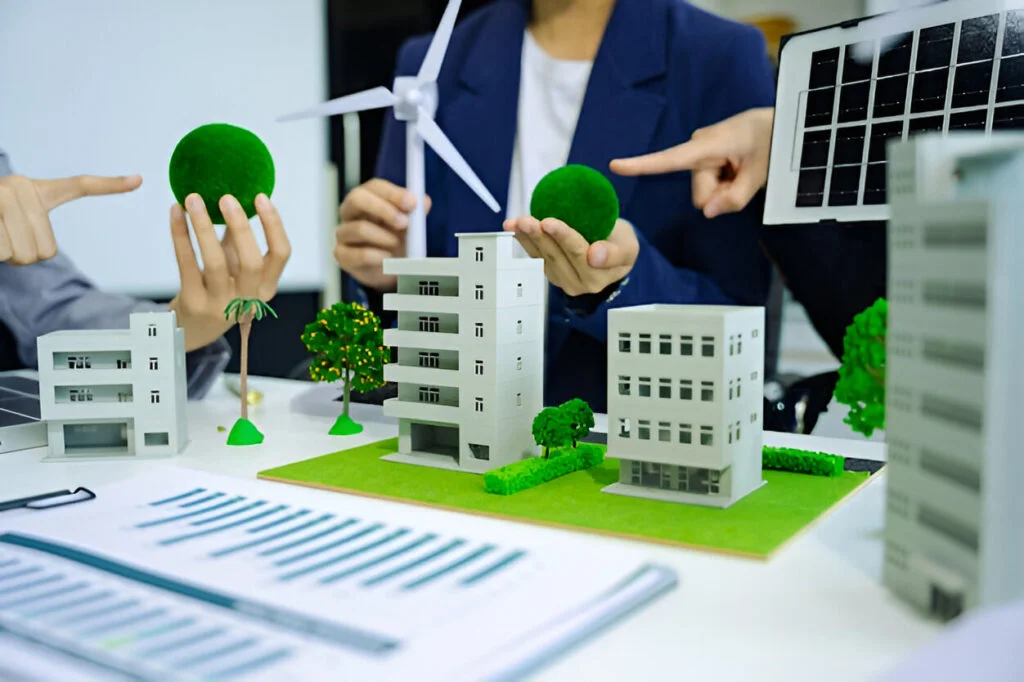
This does not mean every project must use unusual or expensive materials. It means the team should understand the impact of key materials and look for sensible improvements. Durability, availability, maintenance and replacement cycles should also be considered, because a material that performs well on paper may not be the best choice if it fails quickly or is difficult to maintain.
A balanced approach looks at the whole building. Operational savings, embodied impact and practical use all need to work together.
Certification Can Support Commercial Confidence
Measurable efficiency can help developers communicate more clearly with buyers, tenants, investors and lenders. A recognised certification process gives stakeholders a way to understand what has been achieved and why it matters.
This can be especially useful where sustainability reporting, operating costs or long-term asset value are part of the decision-making process. A building that can demonstrate better resource performance may be easier to position in a competitive market.
The strongest projects use certification as a decision-making tool, not only as a final label. When the process is managed early and properly, it helps teams design buildings that are more efficient, more credible and easier to explain.


